



A lot of custom apparel businesses fail for a simple reason: they buy equipment before they build a plan. If you are figuring out how to start a custom t shirt printing business, the smartest first move is not picking a printer. It is deciding who you want to serve, what kind of orders you want to win, and how you will fulfill them without turning every job into a custom headache.
This business can be lean, profitable, and scalable, but only if you set it up around real demand. A school spirit store runs differently from a brand selling graphic tees online. A local fundraiser has different needs than a company ordering polos for a trade show. The more precise you are at the start, the easier it is to price correctly, market effectively, and keep production under control.
How to start a custom t shirt printing business without overbuilding
Most new sellers assume they need a full print shop from day one. Usually, they do not. What they need is a clear operating model.
Start by choosing the lane you want to be in. You might focus on local organizations such as schools, teams, churches, and nonprofits. You might serve small businesses that need staff shirts, event apparel, and branded merchandise. Or you might build a direct-to-consumer brand with online sales. Each path has a different sales cycle, average order size, and customer expectation.
Local group orders often bring repeat business and larger order counts, but they also require quoting, customer service, and deadline management. Direct-to-consumer sales give you more creative control, but customer acquisition can be expensive. Print-on-demand lowers inventory risk, but margins are usually tighter. There is no single best model. The right one depends on whether you want predictable service work, brand-building, or a mix of both.
Before you spend money, define your offer in plain terms. Decide what you are selling, who it is for, and why they should choose you instead of a local competitor or a large online seller. Fast turnaround, no minimums, full-color printing, design help, or easier reordering can all be strong differentiators if you can actually deliver them.
Pick a niche before you pick your equipment
Niche sounds limiting, but it usually makes selling easier. People do not buy custom shirts because they want ink on cotton. They buy for a purpose – a fundraiser, a staff uniform, a family reunion, a school event, or a product launch.
If you target everyone, your message gets vague. If you target youth sports organizations, your offer can be specific. You can talk about roster changes, parent orders, spirit wear, and fast reprints. If you target small businesses, you can focus on consistent branding, staff onboarding, and multi-location ordering.
A useful test is this: can you explain your ideal customer’s order in one sentence? For example, “We help local businesses order full-color staff shirts in small or mixed quantities without setup delays.” That level of clarity makes your website, sales pitch, and pricing much easier to build.
Choose a production model that fits your budget and order mix
This is where many new businesses either overspend or box themselves in. Your production model should match the kinds of jobs you expect to handle.
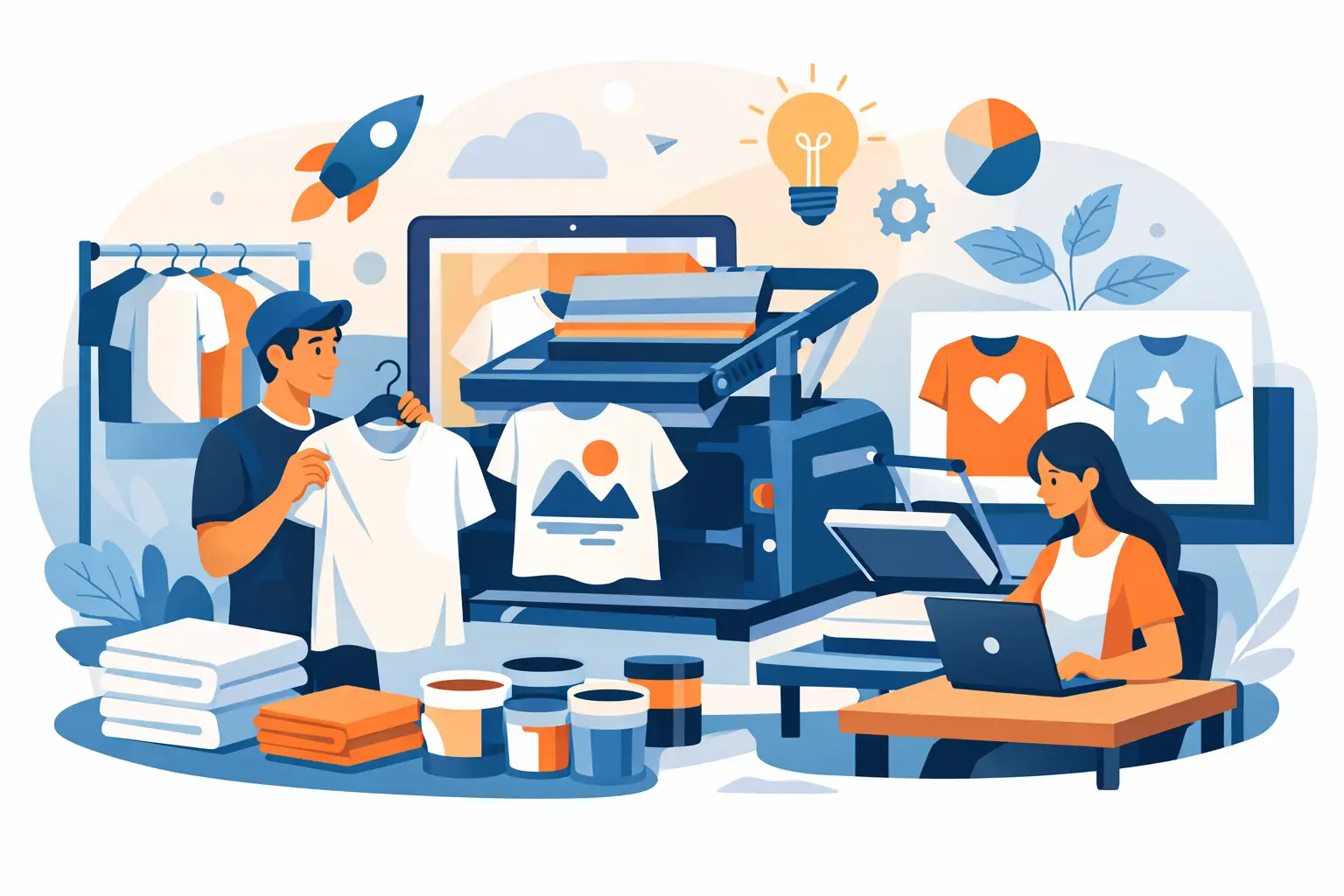
Screen printing can be cost-effective for larger runs with simpler designs, but setup takes more time and each color adds complexity. Direct-to-garment, or DTG, is well suited to smaller orders, detailed artwork, and full-color designs. Heat transfer and DTF can also work well, especially for flexible production and varied graphics. Embroidery may matter later if you plan to sell polos, hats, or higher-end branded apparel.
If you are starting small, outsourcing production can be the most practical option. It gives you room to validate your niche, develop a sales process, and learn what customers actually order. You keep your cash available for samples, branding, ecommerce setup, and marketing instead of putting it all into machines.
Owning equipment gives you more control and potentially better margins, but it also adds maintenance, training, space requirements, and production risk. A late shipment is frustrating. A broken printer with orders due tomorrow is a business problem. Many smart operators start with a hybrid approach and bring production in-house only when volume justifies it.
Build your catalog around what people actually reorder
Your first catalog should be smaller than you think. Too many options slow down decisions and complicate purchasing.
Start with a focused product mix: one to three core t-shirts, a hoodie, a sweatshirt, and maybe a polo or tank depending on your audience. Offer good, better, best pricing tiers if your customers vary by budget. A nonprofit fundraiser may care most about affordability. A corporate office may care more about brand presentation and consistent sizing.
Blank apparel quality matters more than many beginners expect. If the shirt feels cheap, customers remember that long after they forget the design. Order samples. Wash them. Compare fit, print performance, and how colors look on different fabric types. You are not just choosing products. You are choosing what your business will be known for.
Set pricing that protects your time
A lot of new decorators undercharge because they only calculate garment cost and printing cost. That leaves out art cleanup, customer communication, revisions, packaging, spoiled prints, taxes, software, and your own labor.
Pricing should reflect the full job, not just the shirt. If you offer no minimums or small-run ordering, charge in a way that supports that convenience. Small orders take less production time overall, but often more handling per unit. A one-off custom birthday shirt should not be priced like a 200-piece company order.
You also need clear rules around rush jobs, artwork adjustments, and reorders. Standardizing this early saves a lot of friction later. Customers do not mind structure when it is explained clearly. They mind surprises.
How to start a custom t shirt printing business with a clean workflow
A strong workflow is one of the biggest competitive advantages in custom apparel. Customers want ordering to feel easy. They do not want ten emails to finalize one shirt order.
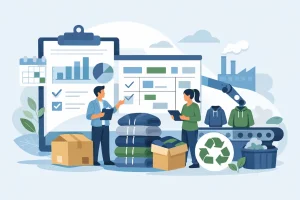
Your process should cover quote requests, design submission, art approval, payment, production, and delivery. Keep each step clear and repeatable. If customers can design online, great. If they need help, make that help easy to access. The best systems support both self-service and hands-on support.
Artwork is often where delays begin. Create simple file requirements, but do not make them so technical that customers get stuck. Many buyers do not know print specs. They just know they need shirts by next Friday. That is why design support can be a real sales advantage.
This is also where a partner model can help. Businesses like Custom Tees Direct have built their value around flexible ordering, premium digital printing, and straightforward design tools because those factors remove friction for customers. That same principle applies whether you are fulfilling in-house or outsourcing – the easier the process feels, the more likely customers are to come back.
Set up your sales channels early
You do not need a complicated ecommerce stack to get started, but you do need a place for customers to understand your offer and place or request an order.
At minimum, your business should have a clean website, product mockups, a quote form or online design option, and clear turnaround expectations. If you serve organizations, consider offering simple storefronts for schools, teams, or company merchandise. That can turn one-time buyers into recurring accounts.
If your niche is local, direct outreach can work faster than waiting for search traffic. Contact schools, event planners, HR teams, booster clubs, coaches, and small business owners with a specific offer. Generic “we print custom shirts” messaging gets ignored. “We help businesses order full-color staff shirts with no per-color charges and easy reorders” gets attention because it solves a real purchasing problem.
Market with proof, not promises
Your best marketing assets are samples, photos, and repeatable use cases. Show what you can produce for a company event, a youth team, a nonprofit walk, or a reunion order. People want to picture their own order, not read abstract claims.
Social media can help, but it works better when it supports real sales activity instead of replacing it. Post finished orders, customer categories, seasonal ideas, and popular garment types. Email can be effective too, especially for reorders and seasonal reminders. Think spirit wear in fall, company events in spring, and holiday apparel late in the year.
Reviews and referrals matter a lot in custom apparel because reliability matters a lot. A customer who gets good-looking shirts on time often knows three other people who need the same thing.
Plan for the operational problems before they happen
Growth in this business is rarely stopped by lack of interest. More often, it gets stalled by missed deadlines, inconsistent quality, and disorganized communication.
Build safeguards early. Track every order. Confirm artwork approvals in writing. Set realistic turnaround times. Have backup suppliers. Leave room for reprints and shipping delays. If you promise fast service, your production and support systems need to back it up.
You should also think about seasonality. School orders, sports seasons, holiday merchandise, and event calendars can create spikes. If your workflow only works when order volume is light, it is not really working.
Starting a custom t-shirt printing business is not about owning the most equipment or offering the biggest catalog. It is about creating an ordering experience that feels easy, dependable, and worth repeating. If you can make it simple for customers to get the right apparel, in the right quantity, with the right print quality, you will have something much stronger than a side hustle. You will have a business people come back to when the next order matters.