



You usually know it the moment company apparel goes sideways. The logo looks too small, the shirt color fights the brand colors, half the team needs different sizes, and someone asks if you can order just three more after the main order closes. If you need to create company shirts online, the process should solve those problems upfront, not add more of them.
For most businesses, the goal is simple: get branded shirts that look professional, arrive on time, and fit the order you actually need. That might mean five polos for a front desk team, 40 event shirts for a trade show, or one last-minute replacement tee for a new hire. The best online ordering setup makes all of that manageable without forcing you into outdated print limits or a long back-and-forth just to get started.
Why businesses create company shirts online now
Ordering online is not just about convenience. It gives teams more control over design, budget, and timing. Instead of waiting for a manual mockup before you can even compare options, you can often test shirt styles, upload your logo, adjust placement, and see how the design works on different products right away.
That matters for businesses that move quickly. Office managers, HR teams, restaurant owners, and event coordinators rarely have time for a complicated apparel process. They need a clear path from idea to order, especially when shirts are tied to a launch, hiring push, customer event, fundraiser, or busy season.
There is also a practical cost benefit when digital printing is part of the model. Traditional screen printing can be a strong choice for some large, repeat orders, but it often comes with setup requirements, color limitations, and minimums that do not fit every business purchase. If your design includes multiple colors, photo elements, gradients, or individualized names, online digital printing usually gives you more flexibility.
What to look for before you create company shirts online
The first thing to check is whether the platform matches the way your business actually orders. A lot of companies do not need 500 identical shirts. They need mixed sizes, maybe a few garment styles, and the option to come back later for extras. No minimum order requirements can make a big difference here because you are not paying for volume you do not need just to access custom printing.
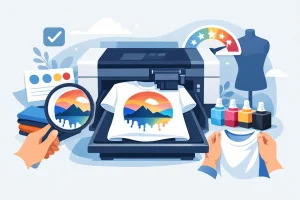
The next issue is color. If your logo uses several brand colors, you should not have to simplify the art just to keep costs under control. Full-color printing without per-color charges is especially useful for small businesses and teams that want a polished brand look without getting pushed into a more limited design.
Ease of design matters too. Not every customer has an in-house designer, and most do not want to learn production software just to place an order. A good online Design Lab should let you upload artwork, add text, position elements, and preview the result without guesswork. If support is available when needed, even better. Sometimes a customer wants self-service. Sometimes they want to talk to a real person and confirm that the logo file will print well.
Turnaround is another place where details matter. Fast production is helpful, but reliability is what really counts. If you are ordering shirts for a conference, employee onboarding, school program, or fundraiser, a missed delivery date can create bigger problems than just inconvenience.
How to create company shirts online without overcomplicating it
Start with the use case, not the shirt. Think about who will wear it, how often, and where. A lightweight short sleeve tee works well for promotions, volunteer events, and casual staff wear. A polo may be a better fit for client-facing teams. Hoodies and sweatshirts make sense for schools, crews, and cooler weather programs. When you begin with the purpose, product selection gets easier.
Next, choose the artwork you actually need. In most business orders, simpler wins. A clean left chest logo, a full front graphic, or a small front with a larger back print usually covers the goal. That does not mean boring. Full-color digital printing opens the door to more detailed branding, but the design still needs to read clearly from a normal distance.
Then think through sizing and quantity with a little buffer. If your staff list says 24 shirts, ordering exactly 24 can be risky unless reorders are easy. New employees, damaged items, or late additions happen all the time. This is where a no-minimum model helps. You can order what you need now and add more later without treating every reorder like a major production run.
Finally, review the mockup like a buyer, not a designer. Check logo size, placement, garment color, spelling, and whether the design still looks strong on the selected shirt style. A great design on a white tee can feel very different on navy, heather gray, or black.
Choosing the right apparel for your team
Not all company shirts do the same job. If you are outfitting a team for daily wear, comfort and consistency matter more than novelty. Staff members are more likely to wear apparel that feels good and fits the setting. That is one reason many organizations build around dependable basics such as short sleeve tees, long sleeve tees, polos, and lightweight hoodies.
If the order is tied to an event, visibility becomes more important. A bright shirt color, clear front graphic, and easy-to-read back print can help staff stand out in a crowd. For trade shows and brand activations, cleaner and more refined often works better. You want the shirt to support the brand, not overpower it.
There is also the question of audience. Company apparel is not always just for employees. Many organizations create branded shirts for customers, donors, volunteers, or supporters. In those cases, softer fabrics, retail-style fits, and strong graphic presentation may matter more than a uniform look. The best online print partner gives you enough product range to match the job instead of forcing every order into one standard template.
Where online ordering saves time and where it still helps to ask for support
Online design tools are excellent for speed, especially when you already have a logo and a clear idea of what you want. You can move fast, test options, and place a straightforward order without waiting through multiple emails.
But there are times when support still matters. If your artwork is low resolution, your brand colors are exacting, or your order includes multiple garment types, getting a second set of eyes can save money and frustration. The same goes for recurring company programs. If you are ordering for several departments or planning ongoing merch sales, a managed storefront or quote-based setup may be more efficient than building every order from scratch.
This is where a hybrid service model stands out. You get the convenience of online ordering, but you are not stuck figuring everything out on your own. Custom Tees Direct is built around that balance, with self-service design tools for quick orders and hands-on support when the project needs more coordination.
Common mistakes that make company shirt orders harder than they need to be
The biggest mistake is choosing based on lowest upfront price alone. A cheap shirt that fits poorly or prints badly does not help your brand. The better question is whether the product gives you the right mix of appearance, comfort, and durability for the intended use.
Another common issue is uploading artwork that was never meant for print. A screenshot from a website or social profile may look fine on a screen and still produce a weak result on fabric. If your logo matters, file quality matters.
Teams also run into problems when they underestimate flexibility. Orders change. Headcounts change. Seasons change. If your print process only works when everything is fixed in advance and ordered in large batches, it is going to create friction for a lot of normal business situations.
A better way to think about branded apparel
When you create company shirts online, you are not just buying shirts. You are setting up a repeatable way to outfit a team, support your brand, and respond quickly when needs change. That could mean one shirt today, 50 next month, and a branded storefront later in the year. The right setup makes all of those options easier.
If the process is simple, the print quality is strong, and the order can scale up or down without drama, company apparel stops feeling like a project and starts working like it should. That is usually the difference between a one-time order and a partner you come back to whenever your business needs to look ready.