



A fundraiser shirt should do more than display a logo. It should give supporters a reason to buy, wear, and talk about your cause after the event ends. That is the real answer to how to print fundraiser apparel successfully: build merchandise people genuinely want, then make ordering simple enough that no donation opportunity gets lost.
Whether you are raising money for a school team, a family facing hardship, a nonprofit program, or a community event, apparel can turn one-time support into visible momentum. The right design, garment mix, pricing, and print method will affect both your profit and your supporters’ experience.
Start With the Fundraising Goal
Before choosing shirt colors or uploading artwork, decide what the apparel sale needs to accomplish. Some campaigns need to generate the highest possible profit per item. Others need broad participation, where a lower price helps more families, students, or community members join in. Those are different strategies, and they can lead to different product choices.
Set a target total and work backward. If your goal is to raise $2,000, estimate your likely number of buyers, then determine how much profit you need from each order. Be realistic about your audience. A school spirit sale may generate many smaller orders, while a corporate charity event may have fewer buyers but a stronger demand for premium hoodies or polos.
Also decide whether you are collecting orders during a short campaign or offering apparel over time. A limited sale creates urgency and can be easier to organize. An ongoing storefront makes more sense for booster clubs, teams, nonprofits, and organizations that expect recurring support throughout the year.
Choose Fundraiser Apparel People Will Wear
The best fundraiser product is not always the least expensive one. A low-cost T-shirt can be a smart entry point, but buyers often spend more when they have choices that fit their lifestyle. Offering a few garment types lets supporters participate at a price point that works for them.
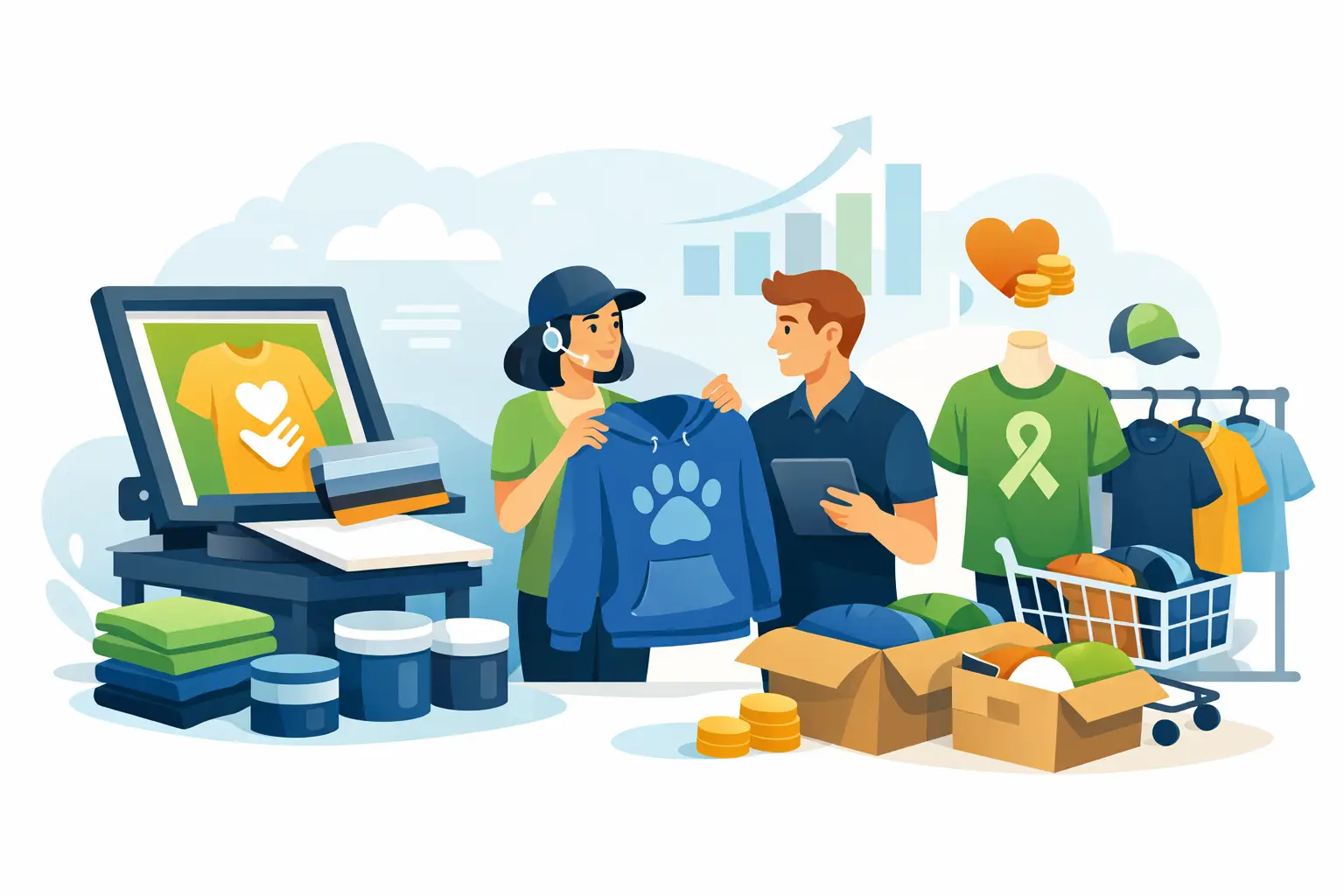
A practical fundraiser collection often includes a short sleeve T-shirt as the core item, plus a hoodie or crewneck sweatshirt for higher-value orders. Long sleeve shirts can work well for fall events, walks, and outdoor sports. Tank tops fit warm-weather runs, camps, and fitness fundraisers. Youth sizes are essential when students and families are the primary audience.
Keep the assortment focused. Too many garment colors, styles, and price points can create decision fatigue and make promotion harder. Start with two or three products and a small, coordinated color palette. For example, a charity 5K might offer a bright event T-shirt, a black long sleeve option, and a premium hoodie featuring the same artwork.
Think about who will wear the apparel after purchase. A bold design on a comfortable, versatile shirt has a longer life than an event-specific graphic with a tiny date. You can still include the event name and year, but give the central message enough visual strength to stand on its own.
Create a Design That Explains the Cause Fast
Supporters should understand the purpose of the fundraiser within a few seconds. Use a clear organization name, team name, event title, or campaign message as the main visual anchor. If the cause benefits a specific person or family, use their name with care and keep the design uplifting and easy to read.
Avoid trying to fit every sponsor, slogan, and detail onto the front of a shirt. Small text can become difficult to read, especially from a distance. Put the strongest message on the front and reserve sponsor recognition, dates, or additional details for the back when needed.
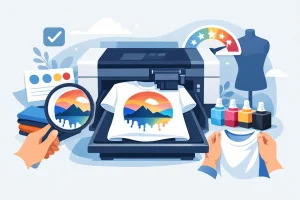
Full-color digital printing gives organizers more freedom than traditional per-color pricing. You can use colorful artwork, photographs, gradients, and detailed illustrations without building the design around a limited ink count. That is especially useful for nonprofit logos, school mascots, memorial artwork, and campaign graphics that rely on specific brand colors.
When preparing artwork, use the highest-resolution file you have. Vector files are ideal for logos, while a high-quality PNG with a transparent background can work well for many designs. If your file is blurry, tiny, or pulled from a screenshot, ask for design help before ordering. A clean print starts with usable artwork.
Keep contrast in mind
A great design can disappear on the wrong garment color. Dark artwork needs a light shirt, while light artwork needs a darker base for visibility. If your logo includes several colors, test it against each garment option instead of assuming it will look the same everywhere.
This is also where a digital preview matters. Use a Design Lab to check placement, scale, and contrast before you submit the order. If you need a second opinion, talk to a real person and request guidance on artwork or product selection.
Decide How to Print Fundraiser Apparel for Your Order Size
Print method matters, but it should serve your campaign rather than complicate it. Traditional screen printing can be effective for large runs of the same simple design. It generally requires more setup, however, and can be less practical when you need multiple garment styles, small quantities, or full-color art.
Digital apparel printing is often the more flexible choice for fundraisers. It works especially well when you want full-color designs, need to offer several products, or do not know exactly how many supporters will order. No minimum order requirement means you can print a single replacement shirt, test a small campaign, or accommodate late buyers without forcing unnecessary inventory.
That flexibility can protect your budget. Instead of purchasing dozens of extras and hoping they sell, you can base production on actual demand where your ordering model allows. For campaigns that need a larger quantity by a specific event date, request a quote early so you can confirm product availability, production timing, and final costs.
Price for Participation and Profit
Fundraiser pricing should be clear from the beginning. Calculate the garment cost, printing, any shipping considerations, and the amount you want to contribute to the cause. Then set a retail price that feels appropriate for your audience and product quality.
Do not hide the fundraising purpose. Let buyers know how their purchase helps. A simple message such as “$8 from every shirt supports the band’s travel fund” gives people confidence that their money has a direct impact. If you are donating all proceeds after costs, say that clearly instead.
Premium items can increase your total raised without requiring everyone to spend more. A buyer who chooses a hoodie may contribute more profit than several basic shirts. At the same time, maintain one accessible option so students, families, and community members can show support without stretching their budget.
Be cautious with complicated discounts. Buy-more-save-more offers can help when families are ordering for several people, but they can also reduce your margin if they were not planned into the price. Keep the offer simple and make sure every order still supports the goal.
Set Up an Ordering Process That Reduces Admin Work
Fundraising organizers already have enough to manage. Avoid collecting sizes through paper forms, spreadsheets, direct messages, and cash envelopes if you can. Those methods invite missed payments, unreadable handwriting, duplicate orders, and last-minute follow-up.
An online ordering process gives supporters a cleaner experience. They can choose their apparel, select the right size, pay directly, and receive clear order information. It also gives your organization a better way to promote the sale through email, social posts, event announcements, and QR codes on flyers.
For recurring programs, a managed online storefront can be especially useful. It gives teams, schools, and nonprofits a central place for branded apparel without rebuilding the order process for every season or event. For a one-time campaign, a custom quote and a defined order deadline may be the best fit.
Make the deadline visible everywhere you promote the fundraiser. Include the exact close date, expected delivery timing, and a short reminder of what the purchase supports. Send at least two reminders before the sale ends. Most supporters mean to order, but many need a prompt.
Promote the Apparel Like a Campaign, Not a Product Drop
A shirt image by itself is rarely enough to motivate action. Pair product photos or mockups with the story behind the fundraiser. Explain what the money will fund, who benefits, and why timing matters. Specificity creates urgency.
Ask a few key people to model the apparel early. Coaches, teachers, team captains, board members, and event volunteers can make the campaign feel active before the first order arrives. If appropriate, share a progress update during the sale, such as the number of shirts sold or how close the group is to a funding goal.
Use consistent language across every channel. If the campaign is called “Play for Parker,” use that name in the design, flyers, email subject lines, and social posts. Repetition makes the fundraiser easier to recognize and easier to share.
Custom Tees Direct can support this process with full-color digital printing, flexible quantities, and design assistance when you need help getting the artwork and product mix right.
Plan for Delivery and the Next Sale
Before opening orders, decide how apparel will reach buyers. Individual shipping is convenient for supporters in different locations. Group delivery can simplify distribution for a school, office, or event, but it requires someone to sort and hand out orders. Choose the method that creates the least friction for your group.
Build in time for reviewing proofs, collecting orders, production, and delivery. Do not wait until the week of an event to start planning. A little lead time gives you more garment options and makes it easier to handle changes without stress.
After the sale, save the final design files, product details, and pricing notes. If the fundraiser performed well, you will have a proven starting point for the next season, event, or campaign. The most effective fundraiser apparel program is not necessarily the biggest one – it is the one supporters are proud to wear and organizers can run again with confidence.