




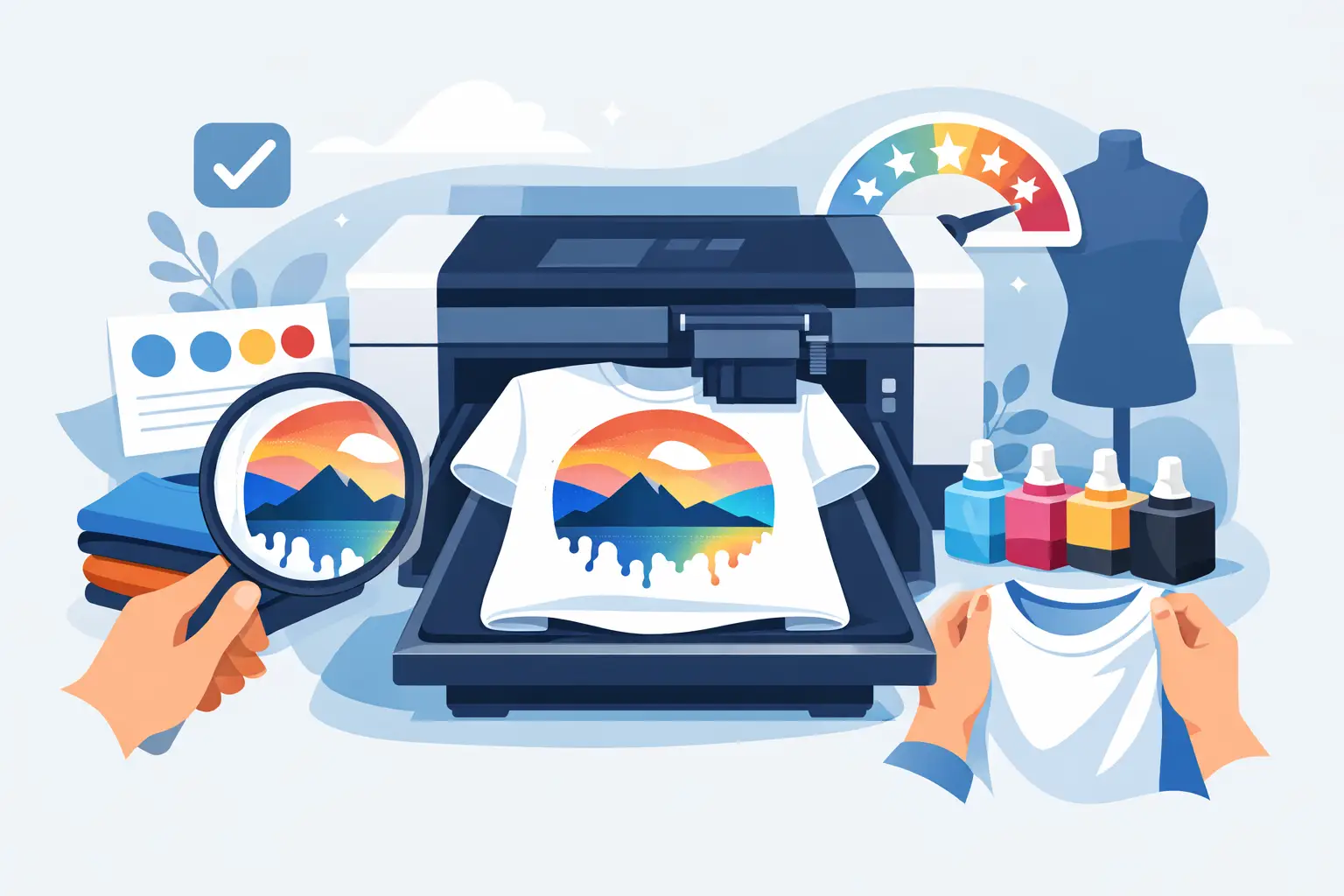
A DTG printing quality review should start with the finished shirt in hand, not just the artwork on a screen. A great digital print has sharp edges, readable small text, accurate color, and a soft feel that fits the garment. For a company order, school spirit shirt, fundraiser, or one-off birthday design, those details determine whether the apparel looks professional after the first wear and the fifteenth wash.
DTG, or direct-to-garment printing, applies full-color water-based inks directly to fabric. Unlike traditional screen printing, it does not require a separate screen for every ink color. That makes it a strong option for detailed artwork, photo-based designs, personalized names, and orders with no minimum quantity. Quality is high when the garment, artwork, print process, and care instructions all work together.
What High-Quality DTG Printing Looks Like
The first sign of quality is detail. Fine lines should look intentional rather than broken, and small lettering should remain readable at a normal viewing distance. DTG is especially effective for artwork with gradients, shadows, multiple colors, and photographic elements because it can reproduce much more visual information than a simplified spot-color print.
Color is the next test. On light garments, ink is printed directly into the fibers, often creating a soft, natural result. On dark garments, a white underbase is typically printed first so the design has a bright foundation. A properly produced underbase helps yellow look yellow, red look rich, and pale blue remain visible instead of disappearing into the shirt color.
A good DTG print should also feel appropriate for the artwork. Larger, high-coverage graphics may have more noticeable ink than a small front-chest logo. That is normal. The goal is not for every print to feel identical, but for the ink layer to be smooth, flexible, and well bonded to the fabric without a stiff, plastic-like patch.
DTG Printing Quality Review: The Factors That Matter Most
A digital printer is only one part of the equation. Even excellent equipment cannot make a low-resolution image sharp or turn an unsuitable fabric into a premium print surface.
Garment fabric and color
Ring-spun cotton and cotton-rich garments are often excellent choices for DTG because they provide a smooth, absorbent surface for the ink. The specific garment matters, too. A heavier tee may feel more substantial for employee uniforms or retail merchandise, while a lightweight shirt can be better for a summer event.
Blends can print well, but results vary by fiber content and garment color. High polyester content may produce a more muted look than 100% cotton, particularly with certain bright colors. This does not make blends a poor choice. It simply means the garment should match the purpose. A performance-focused team shirt, for example, may prioritize moisture management over the exact print appearance of a cotton tee.
Dark apparel requires additional preparation and an underbase, so it often has a different hand feel than the same design on white. If your design includes distressed textures, faded ink effects, or a vintage aesthetic, a light or heathered garment may be the best fit. If your priority is bold contrast for a club logo or event graphic, dark shirts with a strong underbase can deliver the impact you want.
Artwork quality and design choices
Your print can only be as clear as the file you provide. A high-resolution PNG with a transparent background is often a reliable choice for detailed artwork. Vector artwork is ideal for clean logos and type. A tiny image pulled from a social media post or a screenshot from a phone may look acceptable online but can appear soft or pixelated when enlarged for apparel.
Design size matters as much as resolution. A detailed illustration printed at full front size has room to show texture and shading. The same illustration reduced to a three-inch left-chest placement may lose fine details. Simple logos, bold text, and clean shapes generally perform best at smaller sizes.
For the strongest result, avoid asking a print to do too much in too little space. Very thin white lines on a dark garment, tiny type, or subtle color shifts can be difficult to reproduce exactly on fabric. A professional design review can help identify those issues before production, when adjustments are faster and easier to make.
Pretreatment and curing
Two production steps make a major difference in DTG durability: pretreatment and curing. Pretreatment is applied to garments, especially dark ones, to help the ink adhere and allow the white underbase to print cleanly. When it is applied correctly, the design has a more even appearance and better wash performance.
Curing sets the ink after printing. This step is what helps a design remain flexible and wash-resistant instead of cracking or fading early. You may occasionally notice a temporary sheen, slight box effect, or pretreatment residue on a new dark garment. In many cases, that appearance softens or disappears after the first wash, following the care instructions provided with the item.
How DTG Compares With Screen Printing
DTG is not automatically the best choice for every order. It is the better fit when your design has many colors, photo detail, individual names, or a small quantity. It also makes ordering more flexible because there are no per-color screen setup requirements. A single full-color shirt can use the same printing method as a larger run.
Traditional screen printing can still make sense for large orders with a simple, limited-color design. It can be especially cost-effective when every garment uses the same bold artwork and the order volume is high. The trade-off is setup time, per-color considerations, and less flexibility for variable designs.
For many organizations, the decision comes down to operational needs. A school may use DTG for individualized senior shirts, a staff store with several logo options, or a short-notice club event. A large annual run of one-color shirts may be a screen printing candidate. The right method depends on the design, garment, quantity, budget, and deadline.
How to Review a DTG Sample Before Ordering
If brand consistency matters, request a sample or review a proof before committing to a large order. This is especially useful for company apparel, school programs, nonprofit fundraisers, and merchandise that will be sold to the public.
Look at the sample under normal lighting, not only under bright production lights. Check whether the colors support your brand, whether the logo remains clear from a few feet away, and whether the design placement feels balanced on the garment. Run your hand across the print to assess the feel, but remember that a large full-color image will naturally have more ink coverage than a small logo.
Then consider the real use case. A reunion tee may only need to look great for a weekend, while employee uniforms need to hold up through frequent laundering. For youth apparel, comfort and sizing may be just as important as print detail. For online storefront merchandise, choose designs and garments that give buyers a consistent, easy-to-understand product experience.
Getting Better Results From Your Order
The easiest way to improve DTG results is to share the best artwork available and be clear about how the apparel will be used. Provide original logo files rather than images copied from a website. Let your printing partner know if exact brand colors are critical, if a design will be printed on dark garments, or if you need different names and numbers across the order.
It also helps to choose garment colors that support the artwork. Dark ink on a dark shirt can look intentional, but it may not have the visibility needed for a volunteer event or team identification. Contrast is often more valuable than a perfectly matched shirt color. When in doubt, a design professional can recommend a garment and print approach that supports your goal.
Custom Tees Direct makes this process easier with full-color digital printing, no minimum order requirements, and design support when you need a second set of eyes. Whether you are ordering one personalized sweatshirt or apparel for an entire organization, the same fundamentals apply: start with clear artwork, select the right garment, and set expectations based on the design and use case.
The best custom apparel is not just technically well printed. It is apparel people want to put on again. Choose the combination of garment, artwork, and print method that serves your audience, and the quality will show long after the order arrives.