



Ordering 12 shirts when you only need 3 is a fast way to waste budget, storage space, and time. That is exactly why no minimum t shirts have become a practical choice for schools, small businesses, event planners, nonprofits, and anyone who needs custom apparel without committing to a bulk order.
The real value is not just ordering one shirt. It is being able to order the right number, in the right sizes, with the right artwork, without bending your plan to fit a printer’s minimum. For some buyers, that means testing a new staff shirt. For others, it means printing one birthday tee, six reunion shirts, or 40 fundraiser shirts now and reordering later without pressure.
Why no minimum t shirts work for more buyers
Traditional bulk printing made sense when setup was the biggest cost in the job. If every order required screens, color separations, and longer press prep, printers had to spread those costs across a larger quantity. That is why minimums became standard.
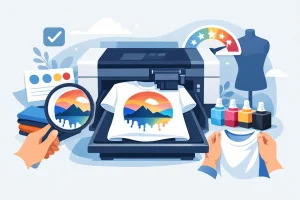
Digital printing changed that equation. It allows full-color artwork to go directly onto the garment with far less setup, which makes small runs much more realistic. If you need one shirt for a sample or a short run for a team event, the order can stay efficient without forcing you into unnecessary extras.
That flexibility matters more than people think. A school club may not know final member counts until the last minute. A business may want one branded polo for a new hire, then five more next month. A family reunion organizer may need youth sizes, adult sizes, and one extra shirt for a grandparent who joins late. Minimum-free ordering fits real life better than the old all-or-nothing model.
When no minimum t shirts are the smartest option
Small orders are the obvious use case, but the better question is whether flexibility saves you more than bulk pricing. Sometimes the answer is yes by a wide margin.
If you are launching merchandise, ordering a few shirts first is often the smarter move. You can check print quality, shirt fit, and design placement before putting money into a larger run. That gives small businesses, creators, and nonprofits room to test demand instead of guessing.
They also make sense for one-time events where exact counts are hard to predict. Bachelor and bachelorette parties, birthdays, school spirit days, volunteer events, and company outings all tend to have moving headcounts. Ordering exactly what you need reduces leftovers and keeps the budget under control.
There is also a staffing angle. Restaurants, retail shops, contractors, and office teams often hire one person at a time. Buying one or two custom shirts as needed is easier than overordering uniforms that may sit unused. For many teams, convenience beats warehouse-style ordering.
No minimum t shirts versus bulk orders
No minimum does not automatically mean cheaper per shirt. That is the trade-off. In many cases, a larger order will still lower the unit price. But the lowest unit price is not always the lowest total cost.
If you buy 50 shirts to get a better rate and only use 28, the savings disappear quickly. You have paid for garments you did not need, plus the risk of wrong sizes, outdated branding, or event-specific designs that cannot be reused. A smaller order with a higher per-piece cost can still be the better business decision.
This is especially true when artwork changes often. Seasonal campaigns, limited-time events, staff role updates, and sponsor-heavy designs can make inventory obsolete fast. With no minimum ordering, you can print in smaller batches and keep your apparel current.
The right choice depends on the purpose of the order. If the design will be used long term and the size mix is predictable, bulk may be worth it. If the order is variable, personalized, or time-sensitive, no minimum is usually the safer route.
What to look for in a no minimum printer
Not all no-minimum apparel services are equal. Some advertise flexibility but make up for it with design limits, extra color fees, or inconsistent garment quality.
Start with the print method. Digital printing is usually the reason no-minimum ordering is possible at all, so it should also deliver the visual quality buyers expect. That means sharp detail, strong color range, and the ability to reproduce gradients, photos, and multi-color logos without adding complexity to the order.
The next checkpoint is pricing clarity. If a printer says there are no minimums but adds surprise fees for every color, setup adjustment, or art tweak, the process becomes less convenient than it sounds. Buyers should be able to understand what they are paying for without needing a spreadsheet.
Ease of ordering matters too. Many customers do not have a designer on staff. They need an online tool that lets them build a shirt, upload artwork, add text, and preview the result before purchase. If support is available when they get stuck, even better. The goal is simple ordering, not a back-and-forth project that drags out a basic shirt request.
Garment selection is another practical factor. A no-minimum option is more useful when it applies across product types, not just one standard tee. Businesses may need polos, schools may want hoodies, and family events may need toddler and youth sizes in the same design family. Flexibility is not just about quantity. It is also about having the right product mix.
Best uses for no minimum custom apparel
This model works well across a wide range of buyers because the needs are rarely identical from one order to the next.
For businesses, it supports onboarding, trade shows, branded team wear, and promotional samples. You can order one test piece for approval, a handful of shirts for a small crew, or a larger run when the timing is right.
For schools and sports groups, it helps with late signups, coach gear, spirit wear tests, and short seasonal orders. Instead of chasing exact counts weeks in advance, organizers can move faster and reorder when needed.
For nonprofits and fundraisers, it lowers risk. If you are trying a new campaign design or event concept, you do not have to tie up funds in inventory before you know what supporters want.
For personal celebrations, the benefit is obvious. Not every birthday party, reunion, or vacation group needs 24 matching shirts. Sometimes you need two. Sometimes you need nine. Sometimes you need one extra after everyone already left the group chat.
Design flexibility is a bigger advantage than most buyers expect
The phrase no minimum usually gets attention first, but full-color freedom is often the bigger win. A lot of custom apparel designs are not simple one-color graphics anymore. They include logos, photos, gradients, detailed illustrations, and layered text treatments.
When the printing process supports full color without per-color charges, buyers can focus on what looks best instead of trimming ideas to fit a production method. That is useful for branded merchandise, school graphics, sponsor-heavy event shirts, and personalized gifts.
It also helps when multiple stakeholders are involved. Office managers, coaches, teachers, and event organizers are often collecting logos and approvals from several people at once. A flexible print process reduces friction because the final design does not need to be simplified just to be printable.
That is one reason companies like Custom Tees Direct are built around digital printing rather than forcing every order through a bulk-first workflow. For many modern buyers, speed and flexibility are not extras. They are the whole reason for placing the order.
The ordering experience should be simple from start to finish
A good no-minimum service should feel easier, not just smaller. You should be able to choose a garment, build or upload a design, review the layout, and place the order without second-guessing the process.
That matters for first-time buyers, but it matters just as much for repeat purchasers. If your organization orders shirts regularly, convenience becomes operational. The easier it is to reorder, update names, change quantities, or swap garment styles, the less time your team spends managing apparel.
There is also value in real support. Some buyers want full self-service. Others need help choosing the right shirt, checking artwork quality, or planning a mixed-size order. The best experience leaves room for both.
Is no minimum always the right answer?
Not always. If you already know your final quantity, your design is simple, and you plan to use the same artwork for a long time, a larger run may offer better per-shirt pricing. That can be the right move for established uniforms, annual event shirts, or proven merch designs.
But if you care about flexibility, want to avoid overordering, or need custom apparel without production friction, no minimum ordering solves a lot of common problems before they start. It gives you control over quantity, timing, and design without making the process harder than it needs to be.
The best custom apparel order is rarely the biggest one. It is the one that fits your timeline, your budget, and the number of shirts you actually need.