



A merch store usually looks simple from the outside. Put a logo on a shirt, add a few hoodies, post the link, and wait for orders. In practice, the difference between a store that gets ignored and one that consistently sells comes down to setup. If you want to know how to launch merch store sales the right way, start by treating it like a real program, not a side task.
That matters whether you’re building a store for a company, a school club, a sports team, a fundraiser, or a one-time event. The strongest stores are easy to shop, easy to understand, and built around what buyers actually want to wear.
Start with the purpose of the store
Before you choose products or upload artwork, get clear on the job the store needs to do. Some merch stores exist to raise money. Some are meant to unify a team or staff. Others support recruiting, event visibility, or brand awareness. The right product mix and sales approach depend on that goal.
A school fundraiser, for example, usually benefits from broad appeal and family-friendly pricing. A company swag store may need cleaner branding, more size inclusivity, and items employees will wear beyond one event. A team store often needs a mix of fan gear and player gear. If you skip this step, it’s easy to build a store that looks fine but misses the audience.
It also helps to define whether your store is temporary or ongoing. A short campaign store can create urgency and keep product selection tight. An always-on storefront gives buyers flexibility, but it needs a cleaner system for restocks, seasonality, and design consistency.
How to launch merch store planning without overcomplicating it
The fastest way to stall a merch launch is trying to offer everything at once. More products do not automatically mean more sales. In many cases, a focused assortment performs better because shoppers can decide quickly.
Start with a small, proven core. T-shirts and hoodies are usually the foundation because they cover the widest range of buyers. Depending on your audience, you may want to add sweatshirts, polos, tanks, hats, or youth apparel. If the store supports a family event, reunion, or school group, toddler and infant items can make sense too. If the audience is corporate, a simpler selection often works better.
A practical launch range often includes one lower-cost item, one premium item, and one everyday favorite. That gives shoppers choice without creating friction. If every item is high-priced, cart abandonment can rise. If everything is budget-driven, your margins and perceived value can suffer. The balance matters.
Choose products people will actually wear
This is where many store owners get too brand-centered. The buyer is not asking, “How can I promote this organization?” They’re asking, “Will I wear this more than once?”
That shifts the decision-making process. Soft, comfortable shirts usually outperform stiff promotional basics. Midweight hoodies often have stronger repeat appeal than niche novelty items. Hats can be strong sellers, but only if the decoration style and fit match the audience. A startup team may love clean embroidered-style branding on a cap, while a youth sports crowd may favor bold, full-color graphics on tees and sweatshirts.
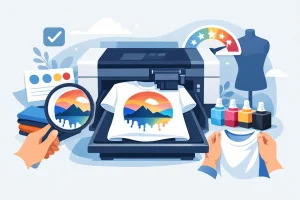
Digital printing gives you more room to personalize products and use full color without worrying about adding costs for each ink color. That is especially useful when you want vibrant artwork, detailed designs, photo-based graphics, or smaller runs. It’s also a good fit when you need flexibility because demand is uncertain and you don’t want to commit to large quantities upfront.
Build designs for buyers, not just stakeholders
The most common merch problem is internal approval by committee. Everyone wants the logo bigger. Someone wants three slogans. Another person wants the event date, sponsor list, and hashtag added to the back. The end result is often crowded and hard to wear.
Good merch design is usually cleaner than people expect. One strong front graphic often beats a shirt with printing on every available surface. If you’re launching for a school, nonprofit, or business, consider creating one design that’s brand-forward and one that’s more lifestyle-oriented. Some buyers want to represent the organization clearly. Others want something more subtle.
Keep readability in mind. Thin text, low contrast, and overbuilt graphics can look weaker on apparel than they do on a screen. If your audience includes kids, parents, staff, and supporters, you need designs that work across sizes and garment colors. This is where a Design Lab or design support becomes valuable, especially if you’re not working with a professional designer.
Price for your audience and your goal
Pricing is not just about covering garment and printing costs. It’s also about setting expectations and protecting conversion. If a fundraiser store is priced too high, people may support it once but not come back. If a company store is priced too low, the brand can feel less premium than intended.
A better approach is to set pricing based on purpose. For fundraising, calculate a margin that feels reasonable and still keeps products accessible. For internal company stores, you may prioritize employee adoption over profit. For events, convenience and speed may matter more than maximizing every dollar per item.
This is also where no-minimum production can make a difference. It lets you test demand without overordering inventory. That lowers risk for organizations that are launching a new store or trying seasonal merchandise for the first time. The trade-off is that not every product should be included just because you can offer it. Product discipline still matters.
Make the storefront easy to shop
A merch store should not feel like a catalog maze. The buyer should understand the offer in seconds. What is this store for, who is it for, and what should I buy first?
Lead with your best sellers. Group products in a way that matches the audience, such as adults, youth, hats, or staff picks. Keep product names simple and avoid internal jargon. If an item is limited-time, say so. If shipping deadlines matter for an event date, make that clear.
Product images also do a lot of selling work. Clean mockups help, but they should accurately represent design placement, color, and overall look. If the decoration is oversized, subtle, centered, or left chest, that should be obvious. Confusion at the product page leads to hesitation, and hesitation hurts conversion.
Plan fulfillment before you promote
A launch is only as strong as the fulfillment system behind it. This is where many organizations underestimate the operational side. They focus on designs and announcements, then realize too late that order management, production timing, and customer communication were never clearly mapped out.
Before launch, decide how orders will be produced and delivered. Are you collecting orders during a sales window and producing them as a batch? Are you using print-on-demand fulfillment for ongoing sales? Is shipping going directly to individual buyers, or are orders being distributed through a school office, coach, or event organizer?
Each model has trade-offs. Batch ordering can improve coordination and create deadline urgency, but buyers who miss the window may be frustrated. On-demand selling offers flexibility and convenience, but the store still needs active management so it doesn’t become stale. The right choice depends on volume, timing, and how hands-on your organization wants to be.
Promote the launch like a campaign
Even a well-built store will not sell if the launch message is weak. Most audiences need multiple reminders, not one announcement. Treat the launch as a short campaign with a clear start, a clear reason to buy, and a clear deadline if applicable.
The message should focus on what the buyer gets, not just the fact that the store exists. That might be school spirit gear, staff apparel, teamwear, event keepsakes, or branded merch that actually looks good enough to wear regularly. If the order supports a fundraiser, say where the money goes. If there are no minimums, mention that benefit when it reduces buyer hesitation.
For organizations with mixed audiences, tailor the message. Parents may care about youth sizing and delivery timing. Employees may care about quality and wearability. Event attendees may care about ordering quickly before a deadline. One generic message usually underperforms.
Review what sells and adjust fast
Your first version is not the final version. One of the biggest advantages of a flexible merch setup is that you can learn quickly. Which products got clicks but not purchases? Which sizes moved fastest? Did buyers choose bold graphics or cleaner designs? Did the lower-cost tee bring people in while the hoodie generated more revenue?
Use that information to tighten the store. Remove weak products. Expand winning categories. Add seasonal items only when there’s a reason. If the audience repeatedly asks for a youth version, a long sleeve option, or a hat color you didn’t include, that’s useful data, not noise.
This is where working with a capable production partner can save time. If you need design support, storefront management, print-on-demand flexibility, or help choosing the right garment mix, having real guidance makes the store easier to scale. For many organizations, that support is the difference between a one-off merch attempt and a repeatable sales channel.
If you’re serious about launching merch, keep the first version clean, useful, and easy to buy from. A store does not need to be huge to work well. It needs the right products, clear design choices, dependable fulfillment, and a setup that respects your buyers’ time.