



A hoodie order usually starts with one simple goal – get something people will actually want to wear. That sounds easy until you are juggling sizes, artwork, deadlines, budgets, and a mix of opinions from staff, students, team members, or event organizers. If you are ordering custom hoodies online, the best results come from treating the process like a buying decision, not just a design exercise.
A good hoodie has to work on three levels at once. It needs to look right, feel worth the price, and arrive without turning into a drawn-out project. Whether you are ordering for a company merch drop, a school club, a fundraiser, a sports team, or a family event, the same rule applies: the easier the process is, the faster you can move from idea to finished apparel.
Why custom hoodies online make sense
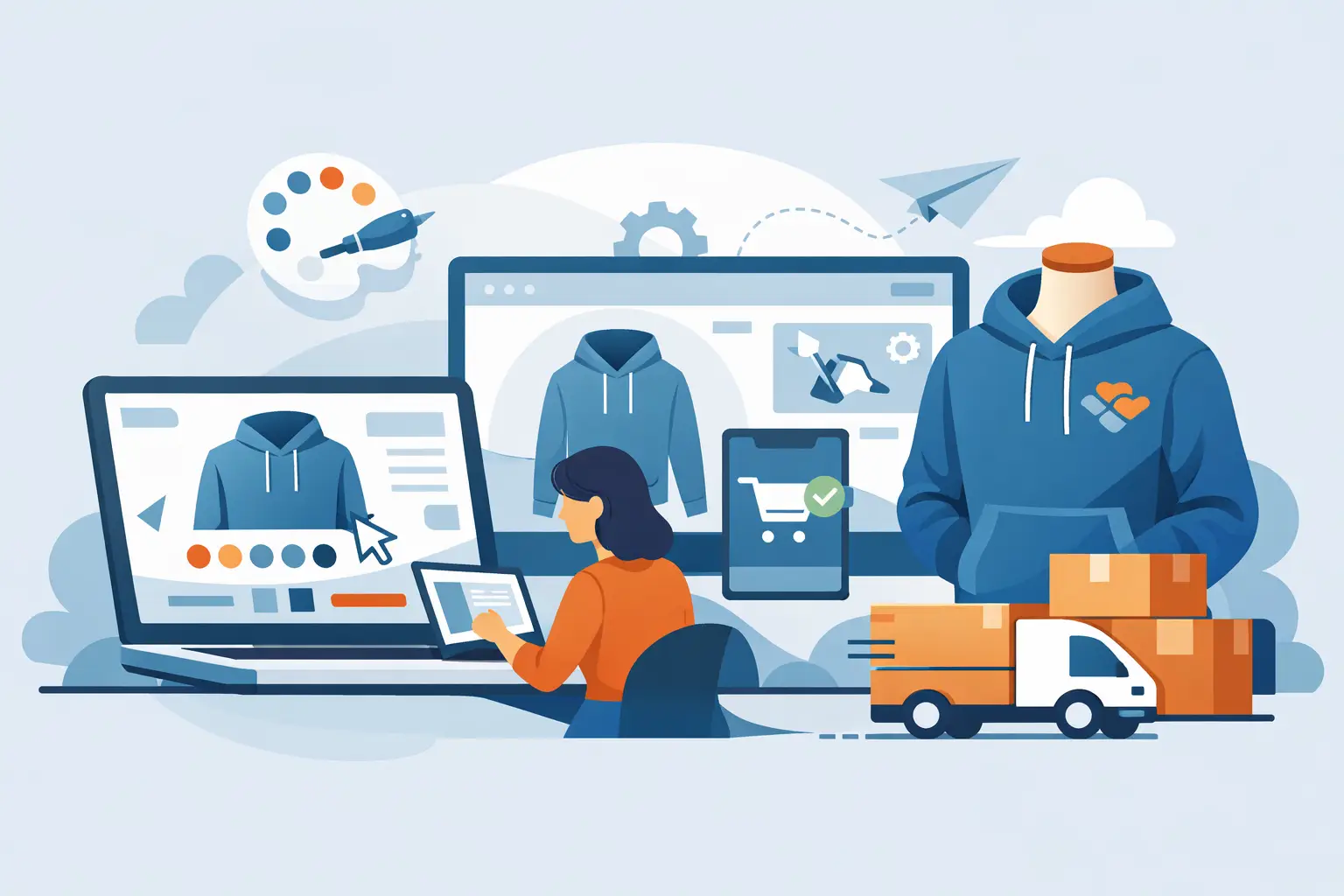
For most organizations and event planners, ordering online is not just convenient. It is often the most practical way to manage apparel without adding extra back-and-forth. You can compare styles, build a design, review colors, and place an order on your schedule instead of waiting for manual proofs before every small decision.
That matters even more when your order is not straightforward. Maybe you need one sample before approving a larger run. Maybe your office wants full-color front prints with employee names. Maybe a school club needs a short turnaround without being forced into a large minimum. Online ordering gives you more control, especially when the platform is built to support both small and large quantities.
The biggest advantage is flexibility. Traditional print buying often works best for simple bulk jobs with limited colors. But custom hoodie orders are not always simple. Digital printing makes more sense when your design is colorful, your quantity is still being finalized, or your group needs the option to reorder later without restarting the process.
What to look for before you place a hoodie order
Not all custom apparel providers are set up the same way. If you are comparing options, the product catalog matters, but the ordering model matters just as much.
Start with the basics. Can you order one hoodie, or are you locked into a minimum? Are there extra charges based on the number of ink colors? Is the design tool easy enough for a first-time buyer to use without outside help? Can you get support from a real person if you hit a problem with artwork, sizing, or timing?
These details have a direct impact on cost and speed. A low headline price does not help much if every color adds another fee or if setup requirements make small orders inefficient. On the other hand, a provider that offers no minimums and full-color printing with predictable pricing gives you room to test ideas, split orders, or create personalized pieces without complicating the budget.
The print method affects the outcome
This is one of the most overlooked parts of ordering custom hoodies online. Buyers often focus on the design and forget that print method changes what is possible.
Digital printing is especially useful for hoodie orders that need color freedom, quick setup, and flexibility in quantity. It is a strong fit for business branding, school graphics, event artwork, photo-based designs, and one-off personalization. You are not forced to simplify the design just to avoid extra color charges.
Screen printing still has its place, especially for very large runs with simple art, but it is not always the most efficient choice for modern merch needs. If your design includes gradients, detailed graphics, or multiple color elements, digital printing can remove a lot of friction from the order.
Choosing the right hoodie for your audience
A sharp design cannot fix a poor product choice. The hoodie itself needs to match how people will use it.
For employee apparel, many buyers want a clean, versatile style that works in casual offices, on job sites, or at events. Midweight hoodies usually hit the best balance between comfort and year-round wear. For school groups and nonprofits, price sensitivity often matters more, so value-driven options can make sense as long as the fabric still feels dependable.
If you are selling merch, the decision gets more specific. Your audience is comparing your hoodie to retail options they already own. That means fit, softness, and brand reputation can affect sales just as much as the artwork. In those cases, it may be smarter to invest a little more in the garment and keep the design clean.
Fit, fabric, and color are not minor details
Unisex sizing covers a lot of orders well, but it is not always enough. If your group has a wide age range or you are ordering for a more style-conscious audience, expanded size options and youth sizing can make a big difference.
Fabric weight matters too. Lightweight hoodies can work for layering and warmer climates. Heavier fleece styles often feel more premium and sell better as branded merchandise. And color choice is about more than matching a logo. The garment color affects print visibility, perceived quality, and how often someone actually wears the hoodie.
Black, heather gray, and navy are reliable because they are easy to wear. Bright colors can work for spirit wear, camps, and event gear, but they should support the artwork instead of competing with it.
How to prepare artwork without overcomplicating it
Most hoodie buyers do not need to be designers, but they do need a workable file and a clear idea.
If you already have a logo, start there. If not, keep the design simple and readable. A strong front graphic, a small left-chest logo, or a clean back print often performs better than trying to fill every available print area. Hoodies already have seams, pockets, and folds. Busy artwork can get lost quickly.
When you build your design, think about viewing distance. Team names, business branding, and event titles should still be legible from several feet away. Fine text and thin lines may look good on screen but feel weaker on fabric, especially on textured fleece.
A good online Design Lab helps by giving you a realistic preview before checkout. That is useful for placement, scale, and color balance. It also reduces the common issue of buyers approving art they have only imagined instead of actually seen.
Budgeting for custom hoodies online
The total price of a hoodie order is shaped by more than quantity. Garment choice, print size, shipping thresholds, and personalization can all move the number.
This is where transparent pricing matters. If a provider charges more every time you add color, revise art, or reduce quantity, your budget becomes harder to manage. For many buyers, the better value comes from a model that keeps pricing straightforward – especially if you need full-color designs or mixed order sizes.
No-minimum ordering is useful even when you plan to buy in bulk. It gives you the option to order a sample first, replace sizes later, or create a separate version for organizers, coaches, or staff. That kind of flexibility saves money in practice because it reduces waste and lowers the risk of ordering the wrong product in volume.
When speed matters, process matters more
Rush orders usually go wrong for predictable reasons. Artwork is not finalized, sizes are incomplete, or the buyer is still comparing products too late in the timeline. If your deadline is fixed, the fastest path is a clear process.
Choose the hoodie style first. Finalize the design second. Confirm sizes before checkout. If there is any uncertainty, ask for help early instead of after the order is already moving.
This is where a hybrid model works well. Self-service tools are great for speed, but responsive support matters when your order has real stakes. A school event, fundraiser, onboarding kit, or company launch does not leave much room for avoidable mistakes. Being able to use an online tool and still talk to a real person is often the difference between a smooth order and a frustrating one.
Who benefits most from ordering this way
Businesses use custom hoodies online for employee apparel, trade show gear, client gifts, and branded merch. Schools and teams use them for spirit wear, clubs, booster sales, and seasonal events. Nonprofits use them for fundraising and volunteer recognition. Individuals use them for birthdays, reunions, bachelorette parties, and vacation groups.
The common need is not just customization. It is convenience without losing control. That is why companies like Custom Tees Direct focus on full-color digital printing, no minimums, and design tools that keep the order moving without turning the customer into a print expert.
The best hoodie order is the one that feels easy before it arrives and looks even better once it does. If you start with the right product, clean artwork, and a printer built for flexibility, your hoodies have a much better chance of getting worn again and again instead of ending up folded in a closet.