



You usually know it is time to order staff shirts when the old ones stop matching, new hires are wearing whatever they have, or an event is coming up fast. The hard part is not deciding you need them. The hard part is getting the right shirts, in the right sizes, with the right logo, without turning a simple project into a week of back-and-forth.
If you are figuring out how to order staff shirts, the fastest path is to make a few key decisions early. You need to know who will wear them, how they will be used, what kind of look you want, and whether you need a small run, a large order, or something in between. Once those pieces are clear, the actual ordering process gets much easier.
How to order staff shirts step by step
The best staff shirt orders start with function, not just appearance. A front desk team has different needs than warehouse staff, restaurant employees, teachers, or event volunteers. Before you choose a product, think about the day-to-day job the shirt needs to handle.
If your team is active, lightweight performance shirts or breathable cotton blends may make more sense than heavier basics. If your staff is customer-facing, polos or cleaner-cut tees may fit the brand better. If the shirts are for a one-day event, your priorities may be speed, budget, and easy group sizing. If they are for ongoing use, durability matters more.
That first decision affects everything else, including price, comfort, and how often people will actually wear the shirt.
Start with the use case
Ask a few practical questions before you build the order. Will the shirts be worn every day or only occasionally? Do employees work indoors, outdoors, or both? Are you trying to create a polished branded look, or just make the team easy to identify at an event?
This is where a lot of orders go sideways. Buyers sometimes choose the cheapest shirt first, then realize later that it is too thin, too warm, too casual, or not the right fit for the setting. A lower upfront price is not always the best value if the shirts do not hold up or staff does not want to wear them.
Choose the right shirt style
There is no single best option for every organization. T-shirts work well for casual workplaces, promotions, school staff, volunteer groups, and field teams. Polos are often a better fit for offices, retail, hospitality, and any environment where you want a more uniform appearance. Long sleeve shirts, hoodies, and sweatshirts can make sense for seasonal use or outdoor crews.
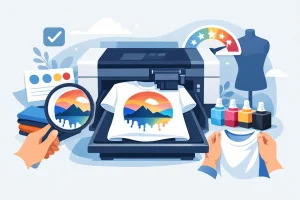
Color matters too. Dark shirts can hide wear better, but lighter shirts may keep staff cooler outside. Black always looks sharp, but it can limit visibility in certain work settings. If your logo has multiple colors, digital printing gives you more flexibility because you are not forced to simplify the artwork just to make the order affordable.
Get your logo and artwork ready
The design does not need to be complicated. In most cases, a clean left chest logo, full front print, or simple back design is enough. What matters is clarity. Staff shirts should be easy to recognize from a distance and consistent with your brand.
If you already have approved artwork, make sure the file is usable. A blurry screenshot pulled from a website or social profile usually will not print well. Vector files or high-resolution artwork are the safest starting point. If you do not have that, it helps to work with a printer that can review the file and tell you what is workable before production begins.
Placement is another decision worth making early. A left chest logo is common for polos and uniform-style shirts. Full front prints are popular for tees, especially for events, nonprofits, and casual teams. Adding a back print with a company name, department, or website can be useful, but only if it serves a purpose. More print locations are not always better.
Keep the design practical
A shirt that looks good on a computer screen is not automatically a good staff shirt. Tiny text can disappear in print. A busy full-color graphic may look great for merchandise but feel too promotional for employee wear. The best staff designs are readable, balanced, and easy to reproduce across sizes.
This is one area where digital printing can be especially helpful. If your logo includes gradients, multiple brand colors, or photo elements, you can usually keep the design intact instead of rebuilding it for a limited color process. That saves time and avoids unnecessary compromises.
Build the size breakdown before you order
Sizing is where simple orders become messy. If you are ordering for a team, do not guess. Collect sizes directly from employees whenever possible. Guessing tends to create leftovers in the wrong sizes and shortages in the sizes people actually need.
It also helps to check whether the shirt style runs standard, fitted, relaxed, youth, or unisex. A unisex tee may work well for broad group orders, but some teams prefer a mix of cuts. For workplaces with ongoing hiring, ordering a few extra core sizes can save time later, especially if there is no minimum requirement and reordering is easy.
If your group includes both adults and youth, or if you are ordering for schools, camps, or family-centered events, double-check that the selected style is available across all needed size ranges. Not every shirt comes in every cut.
Think about reorders now, not later
One of the smartest moves is choosing a shirt that can be reordered easily. Staff teams change. New hires come in. Extras get damaged or lost. If you pick a style that is hard to restock, you may end up replacing the whole look sooner than expected.
For that reason, consistency matters almost as much as price. A dependable style in a standard color often makes more sense than a trendy option that may disappear next season.
Decide how many shirts to order
The right quantity depends on how the shirts will be used. For a one-time event, one shirt per person may be enough. For daily wear, many organizations order two to five shirts per employee so staff can rotate them through the week.
Budget matters, but so does practicality. If your team wears branded apparel every day, under-ordering often creates more hassle than savings. On the other hand, if you are testing a new design or ordering for a small team, no-minimum ordering can make it easier to start small and adjust later.
This is also where print method affects cost structure. Traditional screen printing often makes the most sense for larger runs with simple artwork. Digital printing is usually a better fit when you want full color, smaller quantities, faster setup, or flexibility without per-color charges. It depends on the design and the order size, but knowing your options helps you avoid paying for a process that does not match your actual needs.
Review pricing beyond the base shirt
A low advertised shirt price does not tell you the whole story. You need to know whether the quote includes printing, setup, artwork help, shipping, and any charges tied to the number of ink colors in the design.
This is where buyers often get surprised. A basic tee can look inexpensive until extra fees stack up. If your artwork is full color, make sure you are not being pushed into unexpected charges just because the logo uses more than one or two colors.
Clear pricing saves time and reduces approval delays, especially for schools, nonprofits, and office managers who need to get sign-off before placing the order.
Use an ordering process that matches your team
Some buyers want full self-service. Others want to talk through the order with a real person. The best process is the one that helps you move quickly without creating mistakes.
If you already know the shirt style, color, sizes, and artwork, an online design tool can be the fastest route. It gives you immediate control over layout, product selection, and proofing. If the order is more complex, such as mixed apparel types, multiple departments, or recurring staff needs, quote-based support may be the better fit.
For many organizations, a hybrid approach works best. Build the concept online, then confirm the details with support before production. That keeps the process efficient while still giving you a chance to catch issues early.
Custom Tees Direct is built around that kind of flexibility, which is especially useful when you need full-color printing, quick setup, or the option to order one shirt now and more later.
Final checks before you place the order
Before submitting anything, review the basics one more time. Confirm the shirt style, color, print placement, size breakdown, quantity, and delivery timeline. Make sure the artwork shown in the proof is the correct version. If the shirts are tied to an event or launch date, build in some buffer instead of aiming for the last possible day.
A good staff shirt order should make your operation look more organized, not create another task to manage. When the product fits the job, the design fits the brand, and the process stays simple, ordering becomes a lot less frustrating.
The easiest way to get this right is to treat staff shirts like a working tool, not just a promotional item. When you order with that mindset, better decisions tend to follow.