



If you have ever managed shirt orders through email threads, shared spreadsheets, and last-minute size changes, you already know the problem a custom merch storefront solves. What starts as a simple apparel order can turn into payment tracking, logo questions, inventory confusion, and a long list of follow-ups that nobody has time for.
A storefront gives that process a clear home. Instead of collecting orders one by one, you create a branded online space where people can browse approved products, choose sizes and colors, and place orders without dragging your team into every small decision. For schools, businesses, nonprofits, event organizers, and team managers, that shift saves real time and cuts down on mistakes.
What a custom merch storefront actually does
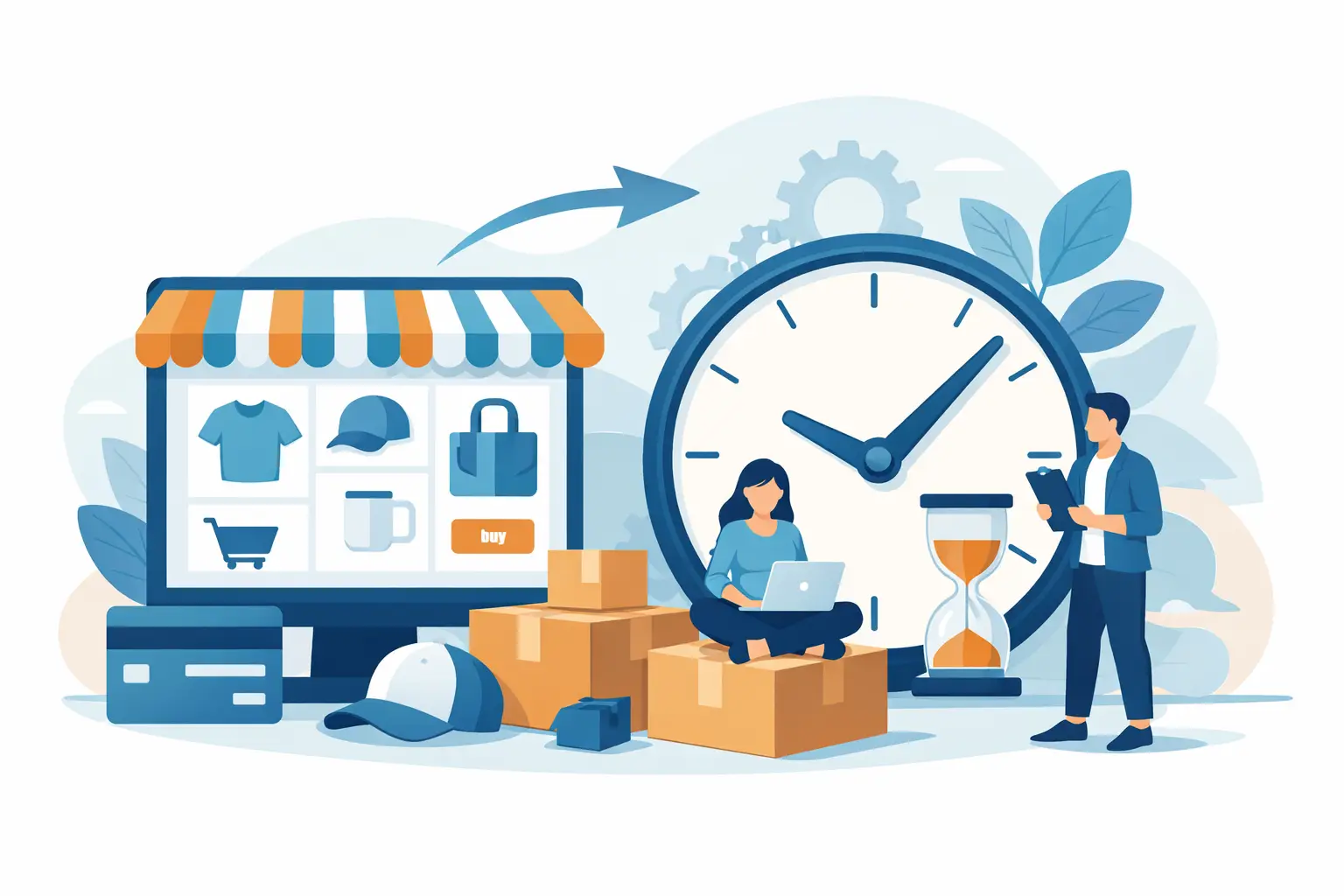
A custom merch storefront is a managed online shop built around your brand, group, or event. It is not just a page with a logo on it. It is a practical ordering system for custom apparel and related merchandise, set up so your audience can buy what they need without extra back-and-forth.
That matters because most organizations do not need a full retail operation. They need a simple way to offer approved products, keep branding consistent, and avoid handling every order manually. A storefront does exactly that.
For example, a school can offer spirit wear year-round. A company can give employees a place to order polos, tees, and hoodies with the correct logo. A nonprofit can run fundraising apparel without collecting forms. A coach can direct parents to one place instead of sending repeated reminders about deadlines, sizes, and payment methods.
The best setups also make room for flexibility. Some groups want a short-term store tied to a campaign or event. Others need an ongoing storefront for recurring orders. The right model depends on how often you sell, who is buying, and whether you want to manage the process yourself or hand it off.
Why a custom merch storefront works better than manual ordering
Manual ordering seems manageable at first because it feels familiar. Someone sends a form, collects responses, and places one big order. But the friction shows up quickly. People miss deadlines. Names are spelled wrong. Sizes change after the order is submitted. Someone asks if youth options are available after the final count is already locked.
A storefront removes much of that friction because the information lives in one place. Buyers see product options, sizing, colors, and pricing before they order. They enter their own details. That reduces the chances of a coordinator becoming the middleman for every question.
There is also a budget advantage in many cases. Traditional ordering methods often push customers toward larger quantities or limited print options because setup takes more effort. Digital printing changes that equation. When there are no per-color charges and no minimums, it becomes easier to offer more personalized merchandise without forcing buyers into bulk commitments they do not need.
That is especially helpful for organizations with mixed demand. Maybe your staff wants embroidered-look polos, your volunteers want soft tees, and a few team members only need one hoodie. A storefront supports those different needs better than a one-size-fits-all order form.
Who benefits most from a custom merch storefront
The short answer is any group that orders branded apparel more than once or has multiple people buying at different times.
Schools use storefronts for spirit wear, clubs, staff apparel, field day shirts, and booster programs. Businesses use them for onboarding kits, employee uniforms, trade show apparel, and internal branding. Sports teams use them for fan gear, coach apparel, and parent orders. Nonprofits use them for fundraising campaigns and volunteer gear. Event planners use them for reunions, races, company events, and celebration merchandise.
The common thread is operational simplicity. The person organizing the order usually has other responsibilities. They are not looking for another project to manage. They want a process that is easy to launch, easy to share, and easy for others to use.
That is why a storefront is often less about selling merchandise in a broad retail sense and more about reducing internal admin work. It gives your group structure without adding complexity.
What to look for in a storefront setup
Not every storefront solves the same problems. Some are built for large-scale ecommerce and come with more complexity than most organizations need. Others are too limited and still leave you handling design approvals, product selection, and order issues by hand.
A useful storefront starts with product flexibility. You should be able to offer the apparel your audience actually wants, whether that means basic t-shirts, premium tees, hoodies, polos, hats, youth items, or toddler sizes. If your audience includes employees, families, and supporters, your product mix should reflect that.
Print method matters too. Full-color digital printing is often a better fit for modern storefronts because it supports small runs, detailed artwork, and variable order volume without extra color fees. That opens the door to better-looking merchandise and fewer pricing surprises.
The buying experience also needs to stay simple. People should be able to pick a product, select a size, review the design, and check out without confusion. If the storefront feels clunky, buyers will stop and email questions. That puts the work back on your team.
Support is another factor buyers underestimate until something changes. If you need help adjusting products, updating artwork, or launching a seasonal campaign, it helps to work with a provider that offers real service instead of just software. A good storefront is not only easy to use. It is backed by people who can step in when needed.
The trade-offs to think through before you launch
A custom merch storefront is efficient, but it is not magic. There are a few decisions that shape whether it works well for your group.
First, you need clarity on your goal. Are you trying to raise funds, simplify internal ordering, support a one-time event, or create an ongoing branded merchandise program? Those are different use cases. A fundraiser might prioritize margin and campaign timing. An employee store might prioritize brand control and easy reordering.
Second, think about how much choice your audience actually needs. More product options can increase participation, but too many choices can slow people down. For some organizations, a tight set of best-selling items performs better than a large catalog.
Third, consider how often designs change. If you have one stable logo and a standard set of apparel, storefront management is straightforward. If every event needs new graphics, new products, and new messaging, you will want a setup that can be updated quickly without starting from scratch each time.
There is also the question of fulfillment. Some groups want all items shipped in bulk to one location. Others want individual orders delivered directly to each buyer. Neither option is automatically better. It depends on your timeline, budget, and how much coordination you want to handle after the sale.
Why no-minimum ordering changes the value of a storefront
One of the biggest reasons storefronts have become more useful is the shift away from minimum-heavy ordering. In the past, custom apparel programs often worked best only when a group could predict volume. That made smaller departments, niche clubs, and one-off events harder to support.
No-minimum production changes that. A business can order a single replacement polo for a new hire instead of waiting to build a bulk order. A family can create reunion shirts without pressure to hit a quantity threshold. A club can launch a storefront even if demand is modest.
This flexibility is not just convenient. It reduces waste, lowers upfront commitment, and keeps people from ordering extras they do not really need. For many organizations, that makes a storefront financially smarter as well as easier to manage.
At Custom Tees Direct, that combination of no minimums, full-color printing, and managed storefront support is what makes online merch programs practical for a much wider range of customers.
When a storefront makes the most sense
A storefront is the right move when orders are recurring, buyers are spread out, or one person is spending too much time coordinating apparel. It also makes sense when branding matters and you want approved products and artwork presented consistently.
If you only need one simple bulk order for a single date, a standard custom order may be enough. But if you expect repeat demand, multiple buyer groups, or ongoing merchandise needs, a storefront quickly earns its value.
The real benefit is not that it looks polished, although that helps. It is that it makes custom apparel easier to buy, easier to manage, and easier to scale without adding more work to your plate.
If your current process depends on reminders, spreadsheets, and crossed fingers, a custom merch storefront is probably not an extra feature. It is the system you needed a few orders ago.