



You usually know the shirt you need before you know how to build it. Maybe it is polos for a sales team, event tees for a fundraiser, spirit wear for a school, or one last-minute birthday shirt that still needs to look polished. When you design custom shirts online, the real goal is not just making something look good on a screen. It is getting apparel that fits the occasion, prints clearly, arrives on time, and stays within budget.
That is why the best online design process starts with decisions, not decoration. A strong shirt order comes from choosing the right product, using artwork that will reproduce well, and understanding how print method, quantity, and turnaround affect the final result. If you are ordering for a business, school, team, nonprofit, or personal event, that clarity saves time and avoids expensive rework.
Why more buyers design custom shirts online
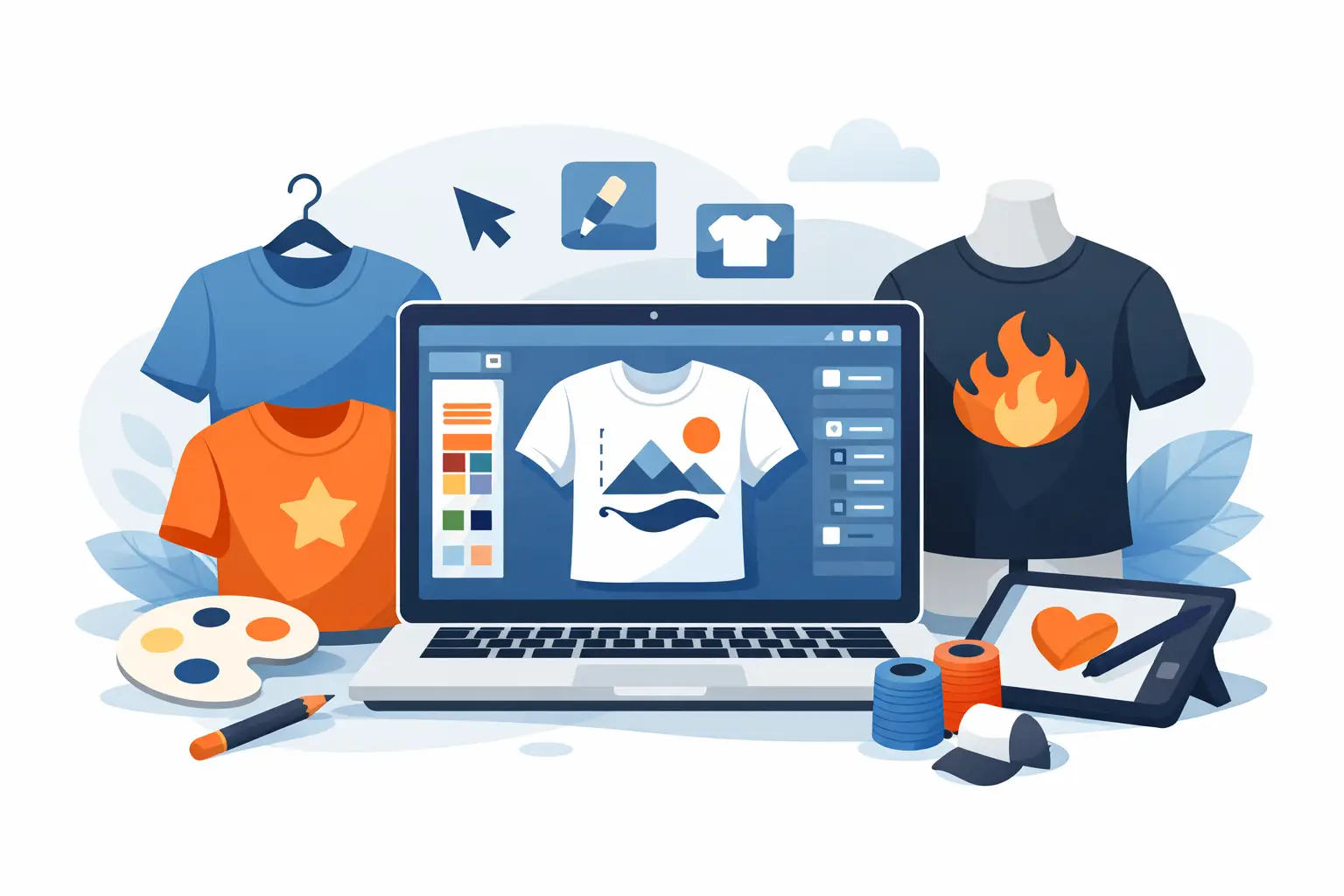
Online shirt design has become the preferred option for one simple reason: it removes friction. You do not need to go back and forth on every small change, wait for basic mockups, or guess what your logo might look like on a dark hoodie versus a white tee. A good online design tool lets you build, review, and adjust in real time.
That matters even more when your order is not standard. Some groups need one shirt as a sample before committing to a larger run. Others need youth sizes, women’s cuts, hoodies, and long sleeve shirts in the same order. Traditional print setups can make that complicated, especially when color count affects price. Digital apparel printing changes that equation because full-color artwork can often be printed without per-color charges, and smaller orders become practical.
For buyers, the advantage is control. You can move quickly when the project is simple and still get support when it is not.
Start with the purpose, not the artwork
Before you upload a logo or type a slogan, decide what the shirt needs to do. A staff shirt for daily wear has different requirements than a one-day event tee. A fundraiser shirt needs broad appeal. A team shirt may need names and numbers. Matching the garment to the use case is where many online orders either go right or start drifting off track.
The shirt style changes the whole project
A basic short sleeve tee is often the most budget-friendly option, but it is not always the best fit. If the audience is corporate or customer-facing, polos may create a cleaner impression. Hoodies and sweatshirts work better for school groups, cooler weather events, and merch sales where perceived value matters. Tank tops make sense for races, fitness studios, or summer promotions. Youth apparel requires extra attention to sizing and print scale.
The design should adapt to the product. A left chest logo may work well on a polo but look too understated on a spirit wear hoodie. A large front graphic can be great for a reunion shirt but too loud for employee uniforms.
Think about who will actually wear it
The person approving the order is not always the person wearing the shirt. That sounds obvious, but it affects everything from fit selection to color choice. Teachers ordering for students, HR teams ordering for staff, and coaches ordering for athletes all need to think one step past the artwork.
If the shirt is meant to be worn more than once, comfort and versatility matter. Neutral garment colors usually get more repeat wear. If the apparel is meant to stand out at an event, brighter colors may be worth it. There is no universal best option. It depends on whether the shirt is serving branding, utility, resale, or celebration.
How to design custom shirts online without design experience
Most buyers are not professional designers, and they do not need to be. The process works best when the platform does the heavy lifting and the user focuses on clear choices.
Start with your core asset. That might be a company logo, school mascot, event name, sponsor list, or even just text. If you have existing artwork, use the cleanest file available. Crisp art almost always produces a better print result than a screenshot pulled from social media or a logo copied from a website. If your file is not ideal, this is where design support can make a big difference.
Then build around hierarchy. What should people notice first from six feet away? Usually it is one thing: the brand name, the event title, the team identity, or the main graphic. Everything else should support that. The most common mistake in online shirt design is trying to fit too much information into one layout.
Fonts matter too. Decorative type can look fun on screen but become hard to read once printed, especially on smaller garments. Simple, bold text performs better for names, dates, departments, and slogans. If the shirt includes a back print with a sponsor list or roster, spacing becomes just as important as the words themselves.
Artwork, color, and print quality
Color is where online design gets exciting, but it is also where print expectations need to stay realistic. Full-color printing gives you far more freedom than traditional methods that charge by the color, but the garment color still affects the visual result. Bright artwork on a dark shirt can look strong and high contrast. A subtle pastel palette on a heather garment may read softer than expected.
This is not a reason to simplify everything. It just means contrast should be intentional. If readability matters, choose color combinations that remain clear at a glance. If the shirt is more lifestyle-driven or retail-inspired, softer combinations may be exactly right.
Photo prints, gradients, and detailed illustrations are often where digital printing stands out. For organizations that want modern graphics without setup-heavy production, that flexibility matters. It is especially useful for short runs, personalized orders, or campaigns where every shirt does not need to be identical.
Ordering one shirt versus ordering a hundred
One of the biggest reasons people design custom shirts online is flexibility. Some orders start with a single piece. Others grow into department-wide uniforms, school events, or merch programs. The ordering process should support both.
No minimum ordering is especially useful when the need is unpredictable. A small business may want one branded hoodie for a new hire, then place a larger order before a trade show. A family may need only a few reunion shirts. A nonprofit might test one design before opening apparel sales to supporters. In these cases, digital printing offers a practical alternative to methods that make small runs feel inefficient.
Larger orders still need strategy. Once you move into bigger quantities, product consistency, size breakdowns, and distribution become just as important as the design itself. If you are ordering for a school, office, or team, gather size information early and confirm whether the group needs standard tees only or a mix of apparel styles. Mixed-product orders are common, but they require better organization.
Speed matters, but timing still needs a plan
Online design tools are fast. Production is faster than it used to be. But speed works best when the order is prepared correctly.
If your deadline is firm, build in time for artwork review, size confirmation, and shipping. Last-minute orders can absolutely happen, but they leave less room to adjust if someone notices a typo, wants a different garment color, or realizes the toddler sizes were left out. For event organizers and office managers, this is often the difference between a smooth rollout and a scramble.
A good production partner helps here by making the process clear. You should know what happens after you approve the design, what affects turnaround, and when it makes sense to ask for help instead of continuing to revise on your own.
When self-service is enough, and when support helps
The best online apparel experience is not purely self-serve and not purely hands-on. It should be both. If you already have print-ready artwork and know exactly what garment you want, an online Design Lab may be all you need. If the project includes multiple departments, storefront sales, personalized items, or branding questions, support becomes more valuable.
That hybrid model is what many repeat buyers need. A coach may want to create simple fan shirts quickly. A nonprofit may need help setting up ongoing merch sales. A business may need branded apparel across polos, hats, tees, and outerwear with a consistent look. In those situations, convenience is not just about placing the order. It is about having a process that scales without getting more complicated.
For many organizations, Custom Tees Direct fits that need by combining easy online design with real support, full-color digital printing, and order flexibility that works for both one-offs and larger programs.
What a strong online shirt order looks like
A strong order is clear, wearable, and built for the actual use case. The product fits the audience. The artwork is readable. The colors make sense on the garment. The quantity matches the moment, whether that is one shirt or a full run. Most of all, the process feels manageable from first mockup to delivery.
If you are about to place an order, keep it simple at the start. Choose the garment with purpose, use the best art you have, and make readability your baseline. You can always get more creative once the fundamentals are right. That is usually how the best custom shirts happen – not by adding more, but by making smarter decisions early.